We use cookies to make your experience better. To comply with the new e-Privacy directive, we need to ask for your consent to set the cookies. Learn more.

Yasaka
Expire In: 00 : 00 : 00
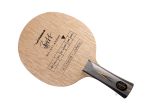
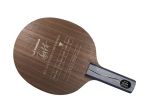
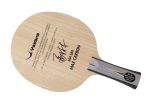
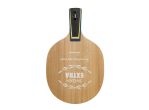
Yasaka, founded in Japan in 1947, aims to produce high-quality table tennis products for players of all skill levels. In 1969, Yasaka developed the Mark V rubber, one of the most renowned rubbers in table tennis history. Since then, many iterations of this rubber have been developed. In 2010, Yasaka released the first member of its flagship Rakza series, i.e., Rakza7, which has a top-sheet that is mostly made from natural rubber gum, providing exceptional touch, feel, and durability. The series expanded with Rakza 9, focusing on speed, and Rakza X,emphasizing grip. Rakza Z and Rakza Z Extra Hard, featuring a hard sponge and sticky top-sheet, cater to players prioritizing grip. This concept is also seen in the Rising Dragon rubber. The latest member of this series, Rakza XX, balances grip and speed with its hard yet dynamic sponge. Rakza PO, Mattias Falck’s short pimpled rubber of choice, completes the Rakza line. Yasaka is also well-known for its blades that are produced in Tranås, Sweden since 1992. Their blade line includes classics such as the Ma Lin series (Carbon, Extra Offensive, Soft Carbon, Extra Special, Max Carbon), the Falck series (W7 and Carbon), and other notable blades like the Sweden Extra, Extra Offensive 7 Power, and Goiabao 5. Chinese legend Ma Lin has had a long-lasting partnership with Yasaka, first as a player (three-time Olympic Champion, nine-time World Champion, and four-time World Cup winner) and later as an advisor. Mattias Falck (2021 Men’s Doubles World Champion, 2019 World Championships Men’s Singles silver medalist, 2022 European Champion Men’s Doubles),Hampus Nordberg, and Satoshi Aida also trust Yasaka for their equipment needs. Did you know that Yasaka is named after its founders, Mr Hirosi YAoita and Mr SAKAmoto?
Rubbers

Blades
Penhold Blades
Accessories
Clothing

Balls
Rackets
For children
Bags
Shoes
Need help choosing the right product? Read: How to Choose a Rubber How to Glue a Rubber
How to Choose Your Table Tennis Rubber
Making the correct choice of table tennis gear need not be difficult. We will present here, recommendations which will, hopefully, help.
Attacking players, who rely mostly on loops and power shots, usually prefer rubbers with high spin and high speed.
Players, who base their game on spinny shots, as well as some defenders, prefer rubbers with a high spin rating, while defenders choose slower rubbers.
However, the higher the speed rating of the rubber, the harder it is to control the ball, also a rubber which is capable of producing high spin, is usually very sensitive to incoming spin. In other words, a higher speed/spin rating always reduces the level of control.
One of the main factors affecting speed/spin ratings is the thickness of the sponge. The thinner the sponge, the easier it is to control the rubber. Thicker sponges also increase overall weight of the paddle; thinner sponges are lighter and usually afford you a better feel of the blade.
- Attacking players prefer sponges 2.0 mm (05/64 in.) and up.
- Allround players and modern defenders use sponges 1.5 mm (01/16 in) and up. The wide range is due to personal and specific styles along with forehand/backhand preferences.
- Classic defenders tend to use sponges no thicker than 1.7 mm (01/16 in) and usually go thinner on the backhand.
We do not recommend sponges thicker 2.1 mm (05/64 in.) to any developing player!
The majority of players use so called inverted (or smooth) rubbers, which have the top sheet with pips on the inner side of the surface. Inverted rubbers generate the most spin and power of all rubber types.
Short pips (rubbers with pips out) are preferred by attackers who are mostly interested not in spin, but in speed and reliable ball handling close to the table. Though it should be noted that the longer the distance from the table, the less effective attacking with any pips becomes. Some short pips can also be used away from the table to chop with quite effectively. This can be good for some modern defensive styles. Also, short pips rubbers can be used by players who are not comfortable playing against high spin.
Long pips rubbers tend to reverse the spin coming from the opponent and anti-spin rubbers tend to neutralize incoming spin and speed. Therefore, they are often used to confuse the other player to force a mistake. However, these rubbers are usually very difficult to use to attack, so they are almost always used in combination with inverted rubbers on the other side of your racket. Many long pips (usually with sponge) are also used to chop at long distances and can be a great choice for a variety of defensive styles.
Tabletennis11 Team.
Gluing the Rubbers (How to Assemble Your Paddle)
Step 1.
Using the applicator sponge, spread table tennis glue thinly over the rubber's sponge side. If the applicator is not available, use soft foam or a soft bristle brush.

Step 2.
Use the same glue application as in Step 1 for one side of the blade. Make sure you have enough glue covering the outer margins of that side (and of the rubber). Then let the glue layers dry for a few minutes until they become transparent then add one or two extra layers to the sponge. Two layers on the sponge and one on the blade is quite common.

Step 3.
Carefully align the rubber with the blade as shown in the picture and then press it down starting from the base of the blade's face and upward.

Step 4.
Put pressure on the rubber using a roller. Then apply pressure rolling it in an upward direction, starting from the top of the handle.

Step 5.
Turn the blade over (so that the rubber faces down) and cut the rubber along the blade's contour. After you are finished with the first rubber, do the same with the second. Then attach the edge tape to protect the edge of your paddle.

Tabletennis11 Team