We use cookies to make your experience better. To comply with the new e-Privacy directive, we need to ask for your consent to set the cookies. Learn more.

DHS
Expire In: 00 : 00 : 00
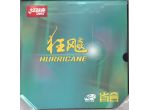
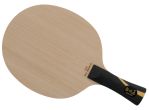
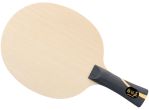
The Chinese company DHS (Shanghai Double Happiness), founded in 1959, is a major force in table tennis. It operates three production plants and an R&D center spanning nearly 20 hectares, employing around 1000 people. Judging by the number of titles won by DHS-equipped players, DHS is unquestionably the most successful brand in the 2000s. In addition, DHS has been a major equipment sponsor of most Olympic Games, World Championships, and ITTF World Pro Tour events in this millennium. DHS balls are used in approximately 70% of international competitions. DHS has a close and productive partnership with the Chinese National Team (CNT), which allows it to stay at the forefront of technique developments and tailor their products to the specific needs of the CNT. Nearly 90% of CNT members use DHS equipment, including many former, current, and future Olympic and World Champions like Ma Long, Fan Zhendong, Chen Meng, Wang Hao, Wang Liqin, and Ding Ning. No wonder, DHS is known as “The Brand of the World Champions” and is considered a top choice for players globally. Most DHS rubbers cater to players with a physically demanding playing style. Notable examples include the Hurricane and Skyline rubber series. The widespread use of DHS rubbers on (at least) the forehand side by CNT members speaks volumes about their quality and performance. DHS also produces a wide range of top-notch blades, such as the Hurricane Long 5, Hurricane Long 3, Hurricane 301, Hurricane Hao, and Hurricane King blades, as well as the Power G blade series, which offers excellent value. Did you know that DHS also manufactures equipment for badminton, basketball, soccer, volleyball and weightlifting?
Rubbers
Blades
Penhold Blades
Accessories
Balls
Rackets
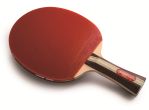
- Racket DHS 301 Hurricane 3 NeoRating:100%Special Price €96.69 Regular Price €131.15
Bags
Tables & Nets
Need help choosing the right product? Read: How to Choose a Rubber How to Glue a Rubber
How to Choose Your Table Tennis Rubber
Making the correct choice of table tennis gear need not be difficult. We will present here, recommendations which will, hopefully, help.
Attacking players, who rely mostly on loops and power shots, usually prefer rubbers with high spin and high speed.
Players, who base their game on spinny shots, as well as some defenders, prefer rubbers with a high spin rating, while defenders choose slower rubbers.
However, the higher the speed rating of the rubber, the harder it is to control the ball, also a rubber which is capable of producing high spin, is usually very sensitive to incoming spin. In other words, a higher speed/spin rating always reduces the level of control.
One of the main factors affecting speed/spin ratings is the thickness of the sponge. The thinner the sponge, the easier it is to control the rubber. Thicker sponges also increase overall weight of the paddle; thinner sponges are lighter and usually afford you a better feel of the blade.
- Attacking players prefer sponges 2.0 mm (05/64 in.) and up.
- Allround players and modern defenders use sponges 1.5 mm (01/16 in) and up. The wide range is due to personal and specific styles along with forehand/backhand preferences.
- Classic defenders tend to use sponges no thicker than 1.7 mm (01/16 in) and usually go thinner on the backhand.
We do not recommend sponges thicker 2.1 mm (05/64 in.) to any developing player!
The majority of players use so called inverted (or smooth) rubbers, which have the top sheet with pips on the inner side of the surface. Inverted rubbers generate the most spin and power of all rubber types.
Short pips (rubbers with pips out) are preferred by attackers who are mostly interested not in spin, but in speed and reliable ball handling close to the table. Though it should be noted that the longer the distance from the table, the less effective attacking with any pips becomes. Some short pips can also be used away from the table to chop with quite effectively. This can be good for some modern defensive styles. Also, short pips rubbers can be used by players who are not comfortable playing against high spin.
Long pips rubbers tend to reverse the spin coming from the opponent and anti-spin rubbers tend to neutralize incoming spin and speed. Therefore, they are often used to confuse the other player to force a mistake. However, these rubbers are usually very difficult to use to attack, so they are almost always used in combination with inverted rubbers on the other side of your racket. Many long pips (usually with sponge) are also used to chop at long distances and can be a great choice for a variety of defensive styles.
Tabletennis11 Team.
Gluing the Rubbers (How to Assemble Your Paddle)
Step 1.
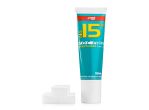
Using the applicator sponge, spread table tennis glue thinly over the rubber's sponge side. If the applicator is not available, use soft foam or a soft bristle brush.

Step 2.
Use the same glue application as in Step 1 for one side of the blade. Make sure you have enough glue covering the outer margins of that side (and of the rubber). Then let the glue layers dry for a few minutes until they become transparent then add one or two extra layers to the sponge. Two layers on the sponge and one on the blade is quite common.

Step 3.
Carefully align the rubber with the blade as shown in the picture and then press it down starting from the base of the blade's face and upward.

Step 4.
Put pressure on the rubber using a roller. Then apply pressure rolling it in an upward direction, starting from the top of the handle.

Step 5.
Turn the blade over (so that the rubber faces down) and cut the rubber along the blade's contour. After you are finished with the first rubber, do the same with the second. Then attach the edge tape to protect the edge of your paddle.

Tabletennis11 Team