We use cookies to make your experience better. To comply with the new e-Privacy directive, we need to ask for your consent to set the cookies. Learn more.

Nittaku H301 NXD

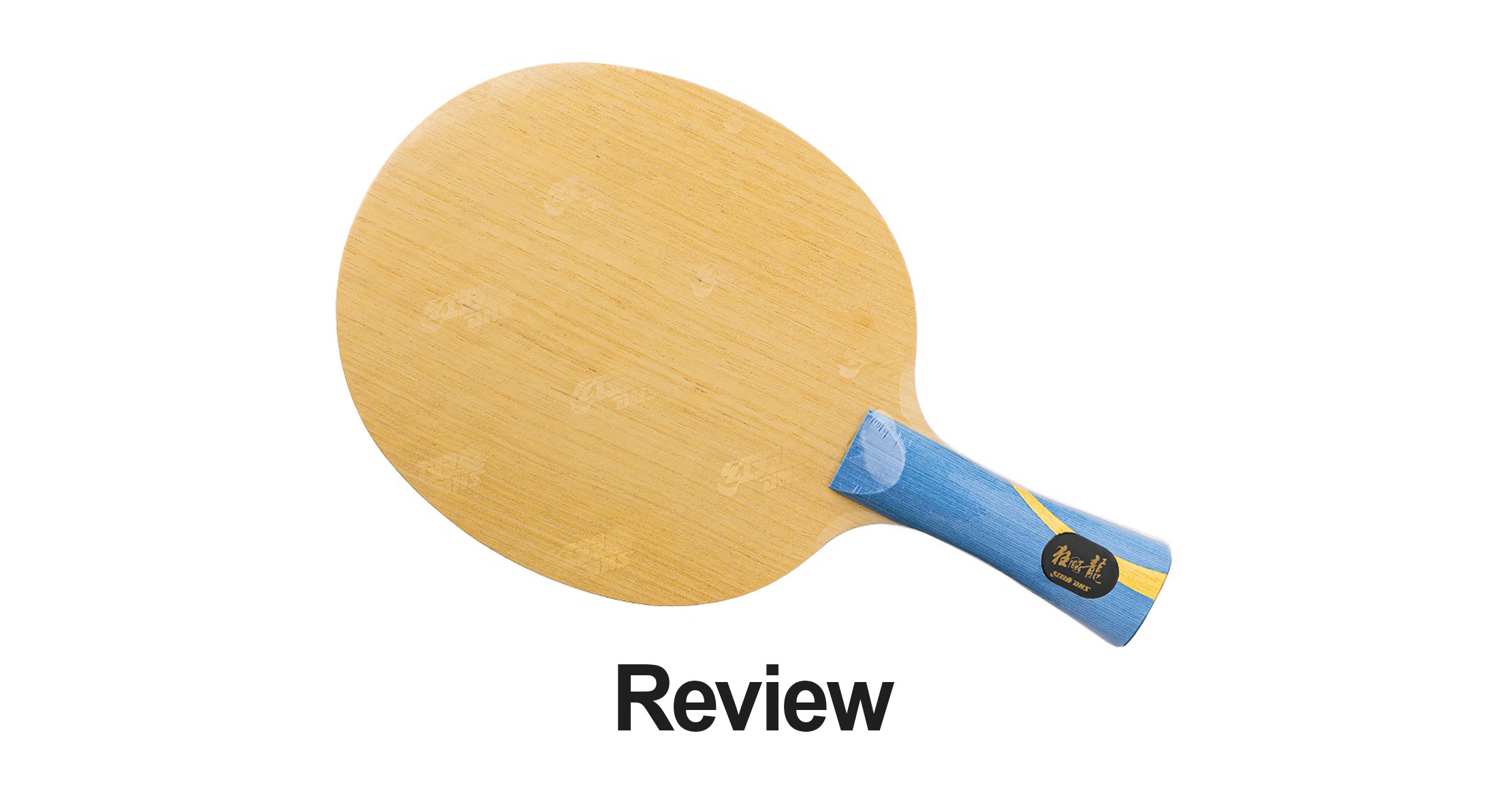
Nittaku H301 NXD
Dear TT11 blog readers,
Welcome to part one of a three-part series, in which I review and compare three highly anticipated blades: the newly released Nittaku H301 NXD (H301NXD), the DHS Hurricane Long 5H (HL5H), and the mythical DHS W968. I have previously reviewed the regular Hurricane Long 5 (HL5), the HL5 Golden, and the DHS 301 and 301X blades, which are all well-suited for aggressive two-winged loopers. Naturally, I was excited to add the HL5H, H301NXD, and W968 to my test bank and see how they compare.
In this first article, I will be reviewing the Nittaku H301 NXD.

Introduction
The H301 NXD has a 5+2 inner-fiber construction and is the result of a collaboration between DHS and Nittaku. Manufactured in Japan, the blade is based on the DHS H301 but features a grip size better suited to Japanese player preferences. It is marketed as a state-of-the-art offensive blade that combines explosive Kevlar-derived power on big strokes with a delicate touch and controlled feedback in the short game. Nittaku rates the H301NXD as mid-fast with a medium feeling. For reference, Nittaku rates its popular Hina Hayata H2 and Mima Ito Carbon blades as fast/medium feeling and fast/hard, respectively.
Packaging
The H301NXD is delivered in a white, red, and black blade-specific box that provides adequate protection during transport. The box states that the blade is the result of a collaboration between Nittaku and DHS. A sticker on the front lip lists the blade’s name and technical information in Japanese, while the back of the box contains generic safety and handling information. The blade is not shrink-wrapped, and no certificates are provided.
Appearance and Measurements
The H301NXD looks strikingly modern. The playing surfaces are metallic bluish-grey. The FH side features Nittaku and DHS logos, as well as the blade name in silver and black, military-style font, while the BH side is free of text. The handle is a darker shade of grey and features an inverted Y-shaped stripe in a lighter grey. The FH side of the handle has a rectangular silver-on-black metallic tag, while the BH side is unadorned. A silver metallic Nittaku tag is embedded in the butt. Overall, the H301NXD looks sleek and contemporary, and its build quality appears very good.
The H301NXD seems to share the same ply construction as the regular H301: a relatively thick ayous core, followed by a medium-thick arylate-carbon weave that differs from the composites used in the HL5H and W968. Thin white penultimate plies (possibly ayous) are surrounded by grey-dyed koto outer plies.
The playing surface of the blade has the following dimensions (height x width x thickness): 158 mm x 151 mm x 5.9 mm. The FL handle has the following dimensions (length x width x height): 100.1 mm, 26.2-34.0 mm, and 23.2-24.7 mm. My sample was heavy at 94 grams. Bouncing a ball on the naked blades produced a resonance frequency of ~1340 Hz, which proved to be very similar to that of the HL5H and W968 blades, suggesting that all three blades are in the high OFF- range.

Testing Procedure
I evaluated the H301NXD using well-used sheets of DHS Hurricane 3 (H3, black, 2.15 mm, 40 degrees) and Yasaka AntiPower (YAP, red, 1.5 mm) antispin as my FH and BH rubbers, respectively. I attached the rubbers using one layer of the Revolution 3 normal viscosity glue on both the rubber and the blade. I tested the setup over three to four sessions, during which I played a mix of regular and match-like drills against my usual high-level practice partner (a two-winged looper). Neottec Neoplast Pro 40+ training balls were used throughout.
Playing Impressions
Initial Impressions
Unsurprisingly, given its 94 g weight, the H301NXD felt quite head-heavy. I was able to grip the blade securely, with the end of the handle pressed firmly against my palm. Overall, the setup felt a little heavy, which had some impact on my forehand-to-backhand transitions.
Driving
The H301NXD felt slower and more solid than I remembered the regular H301 and H301X. The more solid and slightly muted feeling may be attributable to the high weight of this particular sample. The blade falls into the high OFF– category and produces a medium-low throw angle. My FH drives consistently cleared the net, resulting in medium to medium-long trajectories. Overall, I enjoyed excellent consistency on FH drives.
Similarly, my BH antispin drives consistently cleared the net, producing medium to medium-long dipping trajectories that were uncomfortable for my practice partner to deal with.
Looping
The H301NXD’s head-heaviness generates considerable forward momentum on FH loops, resulting in long, relatively flat trajectories. Curiously, these loops did not feel particularly fast or spinny, and my practice partner did not seem to have much difficulty blocking my warm-up loops or third-ball attacks against long pushes. The feeling on FH loops was more muted than I remember from the H301 or H301X, and the blade also seemed less bouncy and dynamic - again, possibly due to its relatively high weight. Coming off an injury, I likely also lacked some of my usual arm swing speed, further contributing to the subdued impression. Nonetheless, consistency on my FH loops was generally very good.
The H301NXD performed admirably in FH-to-FH loop rallies. However, its solid nature and heft meant that while my shots landed consistently near the endline, they lacked a bit of penetrating power. My practice partner did not appear particularly troubled by them.
My BH antispin openers against long pushes benefited from the blade’s solid, almost soft 7-ply all-wood-like feeling. I was able to land dipping, long-trajectory shots with good consistency. For fifth-ball follow-ups, I had to adopt a more active, wristy stroke to prevent the ball from sailing long. Once mastered, this produced nasty, flat shots.
Flicking
The moderate pace and solid feel of the H301NXD lend themselves better to mini-loop-style FH flicks with hard rubbers like H3 than to pancake-style flicks. Conversely, backhand flicks with the softer antispin rubber worked better when executed with a pancake-style motion.
I enjoyed excellent consistency on these shots, which proved difficult for my practice partner to return due to their uncomfortably flat trajectories.
Blocking
The H3/H301NXD combination enabled solid FH blocking but felt less crisp than the (substantially lighter) H301 blade I had tested previously. Incoming high-quality topspin was effectively absorbed and redirected into consistent blocks that rarely overshot the table. Similar behavior was observed during more match-like drills: it was difficult for my practice partner to overpower me with topspin, but I also rarely produced FH blocks that outright won the point.
The H301NXD also worked well for BH antispin blocks, again owing to its solid and linear nature. The feeling was closer to that of a soft, 7-ply all-wood blade than a composite blade. Most of my BH blocks absorbed my partner’s power and resulted in moderately fast, dipping shots that landed safely before the endline.
Smashing
The H301NXD can produce consistent and reasonably fast - but not ultra-fast - FH smashes. Possibly due to its relatively high weight, the feeling is muted and woody, which gives the impression that the blade is less bouncy and more linear than the original H301.
Pushing
As mentioned earlier, the H301NXD absorbs incoming energy well and behaves quite linearly. This served me well on long FH pushes, which were consistent and precise. However, these pushes seemed to lack spin, as indicated by the ease with which my practice partner could attack them. I attribute this to the blade’s relatively short dwell time.
Conclusion
The Nittaku H301NXD – made in collaboration with DHS – is a remarkably unremarkable blade. It enables consistent execution of every stroke without being particularly fast, crisp, or otherwise distinctive. In that sense, one might even call it a little “boring.” This impression may partly stem from my own physical limitations, as I may not be able to fully unlock whatever power reserves the blade has to offer. As it stands, I would classify it as a high OFF– blade that produces a solid, somewhat muted, and almost woody feeling. Intermediate and advanced players will appreciate its consistency, whereas top-level players may find it too slow for the modern game unless paired with very fast rubbers.
About the Reviewer

Patrick 'Pong Professor' Hrdlicka is a table tennis enthusiast with a Ph.D. in chemistry who combines his analytical and experimental skills with his love of table tennis in order to test and review a wide range of table tennis equipment.